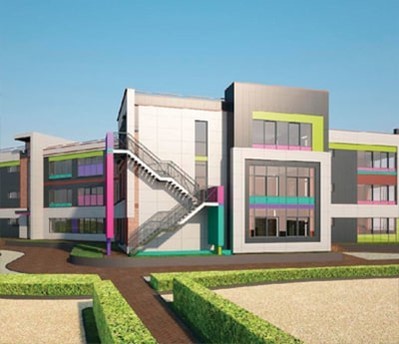
Modern preschool education requires a fundamentally new approach to space organization. Today, a kindergarten has transformed from a simple childcare institution into a multifunctional educational complex where the environment itself becomes an active participant in the upbringing process. The architecture of such buildings consciously abandons standard solutions in favor of individual projects capable of stimulating cognitive activity, creativity, and physical development.
The foundational principle in creating preschool institutions is comprehensive safety. This includes not only structural reliability but also the environmental purity of materials meeting strict standards, as well as a well-thought-out spatial organization system that eliminates potentially hazardous situations. Actively implemented energy-saving technologies—such as air heat recovery, modern heating, and lighting systems—not only reduce operational costs but also create a healthy microclimate.
Architectural and Planning Solutions for a Developmental Environment
Designing a kindergarten is a complex task requiring a balance between regulatory requirements and the creation of a psychologically comfortable, developmental atmosphere. The spatial layout is governed by sanitary and fire safety regulations; however, within these requirements, it is possible to create unique, functional spaces.
In dense urban settings, two-story solutions are considered optimal for efficient land use. For locations with lower density, single-story buildings are preferable, providing direct access from group rooms to playgrounds. Regardless of the number of stories, the main trend is zoning the territory into functional modules:
- Autonomous Group Rooms. Each is a mini-kindergarten with its own play area, sleeping area, bathroom, and changing space. Modern designs incorporate movable partitions, allowing spaces to be combined for joint activities.
- Specialized Development Zones. Rooms for remedial sessions with speech therapists and psychologists, creative workshops, music, and drama studios.
- Multifunctional Common Areas. Atriums and common areas that can be used for free communication as well as for group events.
- Sports and Wellness Block. Includes a gymnasium and, in some projects, a swimming pool with a suite of auxiliary rooms.
- Medical Section. Designed as an autonomous block with a separate entrance, including a doctor's office, treatment room, and isolation room.
- Domestic and Utility Premises. The kitchen, laundry, storage rooms, and technical areas are organized to ensure the shortest logistics routes.
Important Design Aspects
When creating a kindergarten design, special attention is paid to several fundamental aspects:
- Environmental Inclusivity. The space must be accessible for children with diverse abilities. This implies not only ramps and elevators but also adapted sensory equipment, tactile guides, and specially designed play elements.
- Safety and Security. The territory is equipped with a perimeter fence and video surveillance system, while an access control system ensures the children's safety.
- Eco-Friendliness and Sustainable Development. The construction uses natural finishing materials, energy-efficient window systems, and incorporates provisions for maximizing natural light and ensuring high-quality ventilation.
- Connection with the Natural Environment. The design includes ample glazing for visual contact with the surrounding landscape and the creation of indoor winter gardens, facilitating a smooth transition between interior and exterior spaces.
Design Stages: From Concept to Implementation
The process of creating a kindergarten involves a sequence of interconnected stages:
- Pre-Design Analysis. This stage involves engineering and geodetic surveys, analysis of urban planning constraints, and connection possibilities to utility networks. An architectural and planning concept is developed and approved, and a feasibility study is compiled.
- Development of Design Documentation. A complete package of documents is created, including architectural, structural, and engineering sections. Particular attention is paid to calculations for natural lighting, sunlight exposure in rooms, and acoustic comfort.
- Preparation of Working Documentation. Based on the approved design, detailed working drawings, equipment and material specifications are developed, serving as the primary guide for the builders.
- Landscaping Design. A detailed plan for organizing the territory is created, including the placement of play and sports grounds, green zones, street furniture, and the external lighting system.
Building Information Modeling (BIM) in Creating Educational Environments
Modern design actively utilizes Building Information Modeling (BIM) technology, which allows for the creation of a digital twin of the future building. This approach ensures:
- Comprehensive visualization of all building elements and their interrelationships throughout the asset's lifecycle
- Identification and resolution of clashes between various engineering systems during the design phase
- Accurate calculation of material requirements and optimization of construction processes
- Creation of a unified database about the asset for subsequent operation and maintenance
A professional approach to creating kindergartens implies the synergy of strict adherence to regulatory requirements, the application of advanced construction technologies, and a deep understanding of child psychology. The result is the creation of a safe, comfortable, and developmentally stimulating environment where architecture becomes a tool for shaping a child's personality.