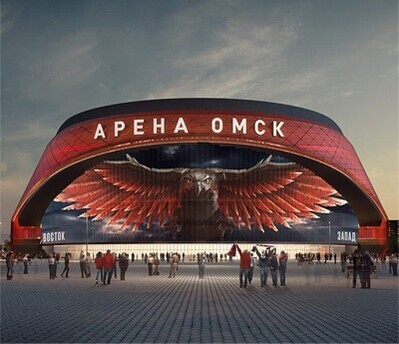
Sport is not only about national health and spectacular competitions but also a powerful social force that unites people. Its development requires modern, safe, and multifunctional infrastructure. Today's sports complexes are not just training grounds; they are complex architectural and engineering facilities, hubs for city residents, places for family leisure, and venues for large-scale events.
Creating such facilities requires deep expertise, as the designer must consider dozens of factors: from the specifics of a particular sport to spectator logistics and the project's commercial viability.
Philosophy of the Modern Sports Complex: More Than Just a Stadium
The key task in designing a sports facility is to create not just a building, but a full-fledged ecosystem that meets two main goals:
-
Creating ideal conditions for athletes. Providing opportunities for effective training, competition, and recovery, which fosters the development of sports at both amateur and professional levels.
-
Forming a comfortable and safe environment for visitors. Making every visit a bright and positive event, whether it's attending a match, working out at a fitness club, or going to a concert.
Based on this, the modern sports facility project is built on the principles of multifunctionality, technological advancement, and sustainable development.
Classification and Purpose of Facilities
Sports complexes vary in their purpose, which directly affects their architectural and layout solutions.
-
Fitness and Wellness Centers. Municipal or state-owned facilities aimed at mass public engagement in a healthy lifestyle. They typically include universal halls for team sports, gyms, swimming pools, and group exercise studios. Sports clubs for children and adults are organized here.
-
Private Fitness Centers and Sports Clubs. Commercial projects that may resemble fitness and wellness centers in structure but offer a significantly wider range of services. In addition to training areas, they often include SPA complexes, saunas, massage and cosmetology rooms, and healthy food bars, creating a comprehensive wellness infrastructure.
-
Training Bases. Highly specialized facilities designed for training professional athletes. Their infrastructure is tailored to one or several related sports. Examples include ice palaces (hockey, figure skating), aquatic sports centers (swimming, highboard diving), or indoor athletic arenas.
-
Multifunctional Sports and Entertainment Arenas. The most complex and large-scale structures intended for hosting major competitions, concerts, exhibitions, and shows. Their design prioritizes safety, spectator logistics, the ability to quickly transform the space, and the integration of advanced media systems (video screens, sound, lighting).
Structurally, facilities are divided into open (stadiums, courts) and closed (arenas, indoor facilities, pools). Closed structures require highly complex calculations for ventilation, air conditioning, heating, and lighting systems to maintain an optimal microclimate year-round.
Structure and Functional Zoning
Competent design is, first and foremost, about logic and efficiency in space organization. Any sports complex is divided into three key, functionally independent zones:
-
Main Zone (Sports Core). The heart of the complex, where training and competitions take place. This could be an ice rink, football field, swimming pool, or gymnastics hall. Requirements for the surface, dimensions, lighting, and equipment here are strictly regulated.
-
Ancillary Zone. Spaces serving athletes and staff. This includes locker rooms, showers, coaches' offices, medical rooms, administrative and utility rooms, and equipment storage.
-
Spectator Zone. Stands, lobbies, food courts, restrooms, and merchandise outlets. The key requirement is the complete separation of spectator flows from athletes and service areas. Unimpeded access, comfortable views from any seat, and paths for quick, safe evacuation must be ensured.
Well-thought-out logistics with separate entrances for athletes, staff, VIP guests, and spectators are a mandatory condition for the successful operation of the facility.
Regulatory Framework and Modern Technologies
The design of sports facilities in Russia is carried out in strict accordance with regulatory documents, the main one being the Code of Rules 332.1325800.2017 Sports Facilities. Design Rules. This document consolidates state standard requirements and contains exhaustive information on the dimensions of areas, safety requirements, materials, and engineering systems for each sport.
For example, when designing an ice arena, it is necessary to consider:
-
Technological access routes for ice resurfacing machines.
-
The possibility of transforming the arena for concerts by laying protective flooring.
-
Integration of automated systems for monitoring ice temperature and quality.
-
A full set of competition equipment: from refereeing systems and scoreboards to professional sound and lighting.
Modern BIM technologies (Building Information Modeling) allow for the creation of a digital model of the facility, which helps identify and resolve any clashes already at the design stage, accurately calculate loads and material quantities, and optimize the subsequent operation of the building.
Experience and Completed Projects
MARASHSTROY LLC has accumulated extensive experience over its long existence in constructing technically complex and landmark facilities. A true gem in our portfolio is the multifunctional G-Drive Arena in Omsk. This project embodies the most modern approaches to sports facility construction: unique architecture, transformable space, the highest level of comfort for spectators, and ideal conditions for athletes.
We are ready to apply our knowledge and technologies to implement sports facilities of any complexity, creating structures that will serve people and glorify sport for decades to come.