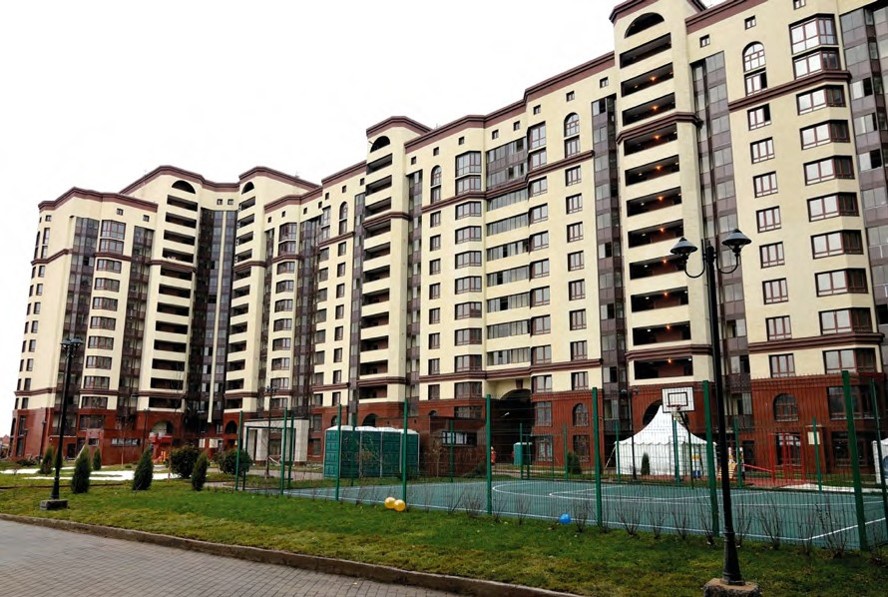
Today, the concept of a residential complex has evolved dramatically. It is no longer just a group of buildings but a meticulously planned urban environment where life gains a new quality. Such a complex solves the main challenge for city dwellers—saving the most valuable resource: time. Everything needed for daily life, work, and leisure is within walking distance: from kindergartens and schools to fitness centers, clinics, supermarkets, and cozy cafes.
From Spot Development to Integrated Solutions: A New Philosophy in Urban Construction
The key feature of the modern approach is the shift from constructing isolated buildings to creating integrated spaces. Unlike spot development, where a building exists in isolation, a residential complex is designed as a single organism.
The main advantages for residents become apparent from day one:
- Well-Maintained and Secure Territory. Instead of standard parking-lot courtyards, genuine landscape parks are created with thoughtful greenery, modern children's playgrounds and sports facilities, recreational areas, and pedestrian walkways. The territory is guarded, ensuring peace of mind for families with children. Comprehensive equipment with video surveillance and automatic fire suppression systems adds an extra layer of security.
- Infrastructural Self-Sufficiency. The complex's design initially includes not only residential buildings but also integrated and attached social and amenity facilities. This relieves residents of the need to make long trips for everyday errands.
- Freedom of Choice and Comfort. Buyers are offered both ready-made, comfortable layouts and options with open plans, allowing for customization according to individual needs. The presence of spacious underground parking solves the problem of car storage and relieves pressure on the grounds.
- Aesthetics and Harmony. Architects and designers pay special attention to the external appearance of the buildings and common areas. Facades, entrances, lobbies, and the surrounding area receive unique, stylish designs, creating a pleasant visual environment and enhancing the status of the location.
Housing Classes: From Comfort to Premium
To meet the demands of different buyer categories, residential complexes are classified by the level of service and quality of finish:
- Comfort Class. Reliable and affordable housing characterized by an optimal price-quality ratio. Ergonomic layouts, functional infrastructure, and well-maintained grounds.
- Business Class. An elevated standard of living. This class features improved finishing materials, underground parking, panoramic glazing, an expanded set of services (e.g., concierge), and more refined architectural solutions.
- Elite/Premium Class. Exclusive projects offering the maximum level of privacy, service, and individuality. Signature architecture, views of parklands or the historic center, apartments with terraces, use of premium materials, and advanced technologies.
Design: Digital Technologies as a Guarantee of Precision and Efficiency
Creating a residential complex is a complex, multi-stage process that begins with in-depth and comprehensive design. MARASHSTROY focuses on using advanced technologies such as Building Information Modeling (BIM).
A BIM model of a building is not just a drawing; it is a digital twin of the future asset. This technology allows for:
- Visualizing the object in 3D before construction begins and optimizing layout solutions.
- Identifying and resolving clashes between engineering systems at the earliest stage.
- Calculating estimates more accurately, minimizing the risk of budget overruns.
- Implementing effective control at all construction stages, guaranteeing strict adherence to the project.
Composition of Design Documentation: A Comprehensive Approach to Detailing
Design documentation is the foundation upon which the entire project is built. It is an exhaustive set of technical, architectural, and economic solutions. Its composition is strictly regulated and includes the following sections:
- Explanatory Note. Contains a general project description, technical and economic indicators, justifications for the adopted solutions, and characteristics of the development site.
- Site Plan. Defines the location of all buildings and structures within the complex, access roads, pedestrian paths, landscaping, and amenity zones.
- Architectural Solutions. Includes detailed facade drawings, floor plans, cross-sections, descriptions of finishing materials, and color schemes. This section is responsible for the external appearance and internal ergonomics of the future housing.
- Structural and Layout Solutions. Describes in detail the building's load-bearing structures (foundations, walls, floors), materials and technologies used, and measures to ensure the object's stability and durability.
- Engineering Systems and Networks. One of the most voluminous sections, including designs for power supply, water supply and sewage, heating, ventilation and air conditioning, low-current systems (internet, TV, intercom), and dispatching systems.
- Construction Management Plan. Defines the sequence, timelines, and methods of construction works, site organization, and logistics.
- Environmental Protection Measures. Contains a set of solutions aimed at minimizing the environmental impact of both construction and operation.
- Fire Safety Provisions. Details the fire protection system: escape routes, fire resistance of structures, location of fire hydrants, and automatic fire suppression systems.
- Accessibility for People with Limited Mobility. Includes design solutions for creating a barrier-free environment: ramps, elevators, widened doorways, and specially equipped premises.
- Cost Estimation Documentation. Represents a complete financial calculation of the construction cost, including expenses for materials, labor, and equipment.
The design stage includes pre-design analysis and surveys, development of the full documentation package, and subsequent construction support through author's supervision to guarantee compliance with all approved plans.
Reliability and Experience as the Foundation of Successful Projects
The construction of multifunctional residential complexes remains one of the most promising directions in development. Demand for high-quality, well-designed housing in an integrated environment continues to grow steadily.
MARASHSTROY, with its substantial experience, portfolio of completed projects, and team of highly qualified specialists, offers the market solutions that combine thoughtfulness, reliability, and modern quality standards. A prime example is the Ostrov 7 residential complex in Moscow – a scenic waterfront quarter with seven business- and premium-class buildings, located between the central boulevard and the Moscow River embankment. A unique residential ecosystem has been created here, featuring boutiques, sports centers, restaurants, and extensive green spaces surrounded by parklands. We are confident that the future of modern cities lies with such projects.